 View full image ↗
The useful diagram is a chain, not a funnel
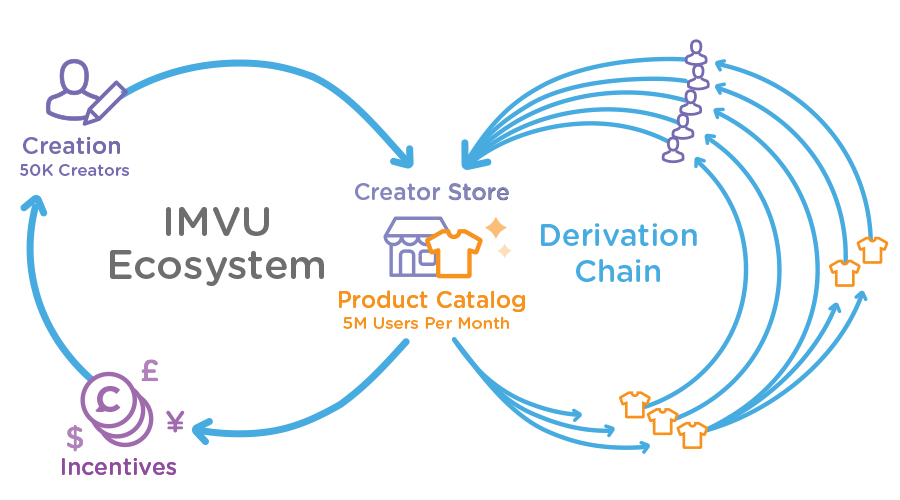
IMVU's current creator page describes an ecosystem that begins with meshers, the people who build 3D forms that others can work from. It then names texture artists, who alter a product's surface appearance, and stylists, who assemble outfits or room bundles from catalog items. The page's own diagram calls this a derivation chain. That phrase is more revealing than a generic promise to let anyone create: one person's finished shirt or chair can also be infrastructure for another person's variation.
This is a contemporary case, not a reconstructed 2004 launch story. The source is a living marketing and onboarding page with no reliable publication date. Its current workflow is still worth reading because it makes creative dependency unusually visible.
Three roles, three kinds of authorship
A mesher decides silhouette, topology and where a texture will sit. A texture artist can produce a materially different look without rebuilding that geometry. A stylist creates value through selection and combination: the work is curation, fit and presentation. IMVU's beginner page mirrors those layers by suggesting an outfit first, then a shirt, then furniture. The ladder moves from arranging existing goods toward modifying and making assets.
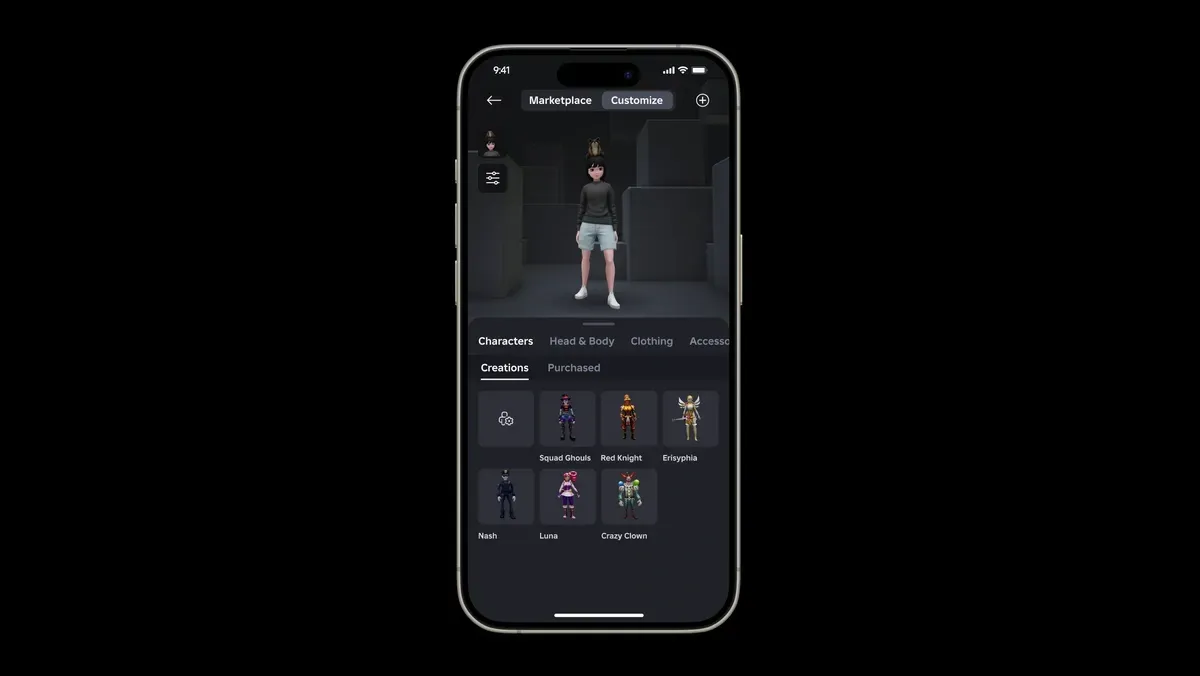
That progression helps explain why a creator marketplace is not one audience. The person learning composition, the artist painting a surface and the 3D specialist building a reusable base need different files, previews and explanations. A platform that labels all three simply as sellers hides the handoffs that determine whether products are understandable and reusable. For comparison, Avatar Dispatch's report on Roblox opening Marketplace creation shows a different platform widening who can publish, but access alone does not describe the production roles inside a catalog.
Derivable does not mean ownerless
A chain only works if each link knows what it may do. IMVU's current Studio tutorial distinguishes primary or base products from derived products, says many catalog products can be derived, and explains that a creator can edit and sell a product when its owner has set it as derivable. It also says upstream creators and the deriving creator both earn when the derived product sells. Those rules turn reuse into a visible catalog relationship rather than an informal copy. The dependency still creates risk: a downstream item can rely on an upstream asset, a platform account and catalog rules that the downstream creator does not control.
For makers, a practical exercise is to draw the ancestry of one item before publishing it. Record the base mesh, textures, bundled products, permissions and the account responsible for each. Then ask what a buyer receives if one component is disabled or revised. This is an editorial checklist, not a claim that IMVU resolves every dependency.
The platform sets the price of participation
IMVU's current program page says joining requires an IMVU account and VIP membership; the same page advertises a monthly creator-program price. Those terms can change, so readers should confirm them at the source before budgeting. The broader point is stable: creative access is governed not just by skill but by membership, platform currency, catalog review and the discoverability of the finished item.
The best takeaway is not a revenue promise. IMVU's page includes company-reported payout and audience claims, but they do not establish what a typical creator earns. What the documentation does establish is a production model in which reuse can be intentional, visible and economically linked. For a tool designer, that suggests a sharper product question than 'Can users sell things?' Ask whether one creator can understand, credit and lawfully extend another creator's work without leaving the workflow to guess.
Sources & limits
Living first-party IMVU pages document the current roles, derivation concept, onboarding sequence and participation requirements. They do not establish the platform's original launch date, typical earnings or outcomes for individual creators; workflow analysis and the dependency audit are editorial interpretation.
- Creators — IMVU
first-party · Publication date not stated · Retrieved 19 September 2026 - Get Started — New Creator
first-party · Publication date not stated · Retrieved 19 September 2026 - Deriving a New Product
first-party-documentation · Publication date not stated · Retrieved 19 September 2026
Send a correction with the passage and supporting source.