What happened
Apple released iOS 12 on 17 September 2018 and described Memoji as personalized characters created inside Messages. People could choose customizable characteristics and use the characters with camera effects in Messages and FaceTime. The release also said Animoji and Memoji could capture winks and tongue movements, extending the face-tracked performance vocabulary.
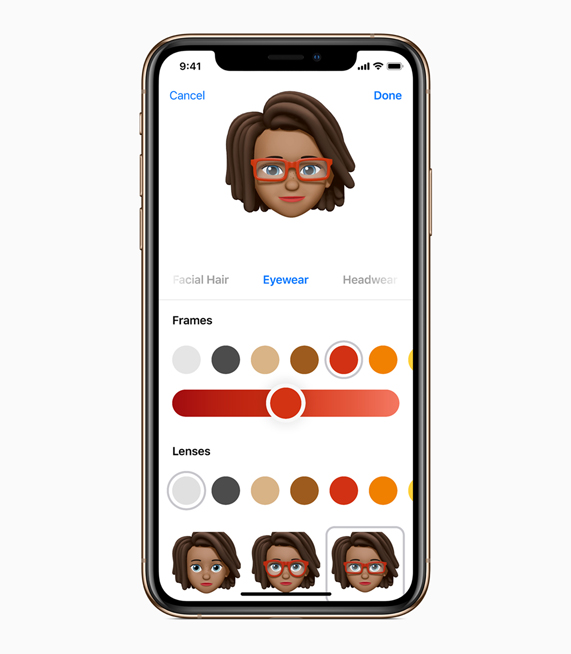
The announcement establishes availability, communication contexts and Apple’s representation claims. It does not list every option or prove the choices felt inclusive to every user. Its image set is more specific than the generic hero: the accepted local asset is Apple’s inline Memoji customization screen, with a human cartoon and editable eyewear controls.
The human implication
Memoji joined two modes of self-presentation often treated separately: deliberate construction and live expression. A person first shaped the character, then animated it with movements happening in the moment. The result could be recognizably authored without requiring a live view of the sender’s face or surroundings.
That makes the avatar a privacy and performance interface at once. It can conceal a room and soften camera exposure while still carrying timing, voice and facial motion. Yet tracking never captures a person neutrally. The system chooses which movements count, how strongly they appear and which facial differences its model handles well. Customization makes a similar selection about which features deserve controls. The design challenge is to let people understand and correct both translations: the static likeness and moving performance. Apple’s release made this negotiation part of ordinary conversation, where a small misreading can change the tone of a joke, greeting or intimate exchange.
Sources & limits
Apple verifies iOS 12 availability, Memoji customization and tracked expressions; adequacy and user effects are not inferred.
- iOS 12 is available today
first-party · 17 September 2018 · Retrieved 15 September 2026
Send a correction with the passage and supporting source.