What the June paper found
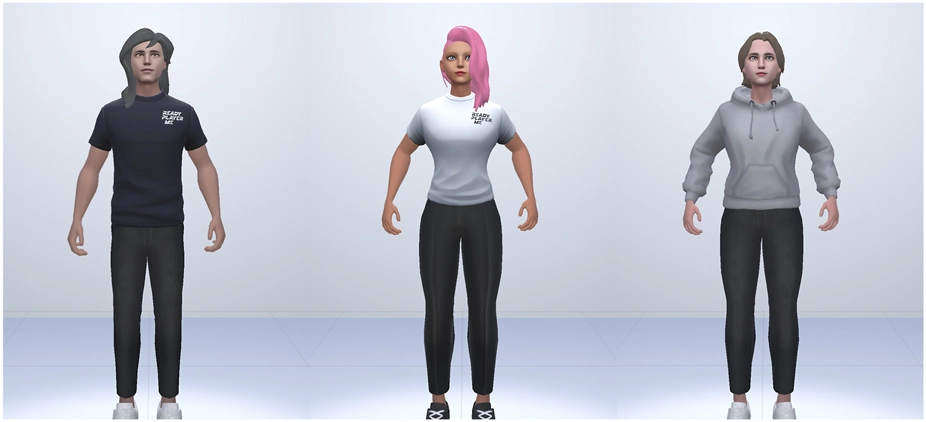
Judith Hartfill and colleagues compared generic, self-configured and photo-generated full-body avatars with 30 participants. The self-configured condition received higher attractiveness and valence ratings and stronger threat reactions than the photo-generated condition. Direct embodiment measures remained inconclusive. The paper therefore offers a mixed result: how people help make an avatar may matter, but the study does not show a clean winner on every measure of feeling embodied.
The making is part of the experience
A portrait generated from a photo can look like an efficient shortcut. Yet selecting a hairstyle or an outfit gives somebody a chance to decide what they want to bring into the room. Those choices can concern resemblance, mood, role or aspiration. Eliminating the work of customization may also eliminate a moment when the wearer makes the character their own. This is a design question, not a conclusion that every slider is valuable.
For creators and platform teams, the useful comparison is between different kinds of effort. A tedious editor can be exhausting; a fast generator can be frustrating if it cannot be corrected. An appealing system may combine a workable starting point with a small number of meaningful revisions. The user should be able to say what is wrong in ordinary terms and see a change that matches that intention. Speed matters most when it helps a person arrive at a representation they accept.
Keep the mixed result intact
The inconclusive embodiment finding should stay in the headline discussion, not disappear into a footnote. Attractiveness, emotional response and the sense of owning a virtual body are different outcomes. Selecting the most favorable measure would make the story tidier and less informative. This paper is useful because it keeps the creation process in view while leaving a real question open: which parts of making an avatar help a person inhabit it, and under what conditions?
Sources & limits
Thirty-participant experiment with mixed findings. Higher ratings on some outcomes do not establish stronger embodiment or general superiority of an avatar-generation method.
- The influence of avatar generation and appearance on embodiment and user experience in virtual reality
original-research · 17 June 2026 · Retrieved 15 September 2026
Send a correction with the passage and supporting source.