What happened
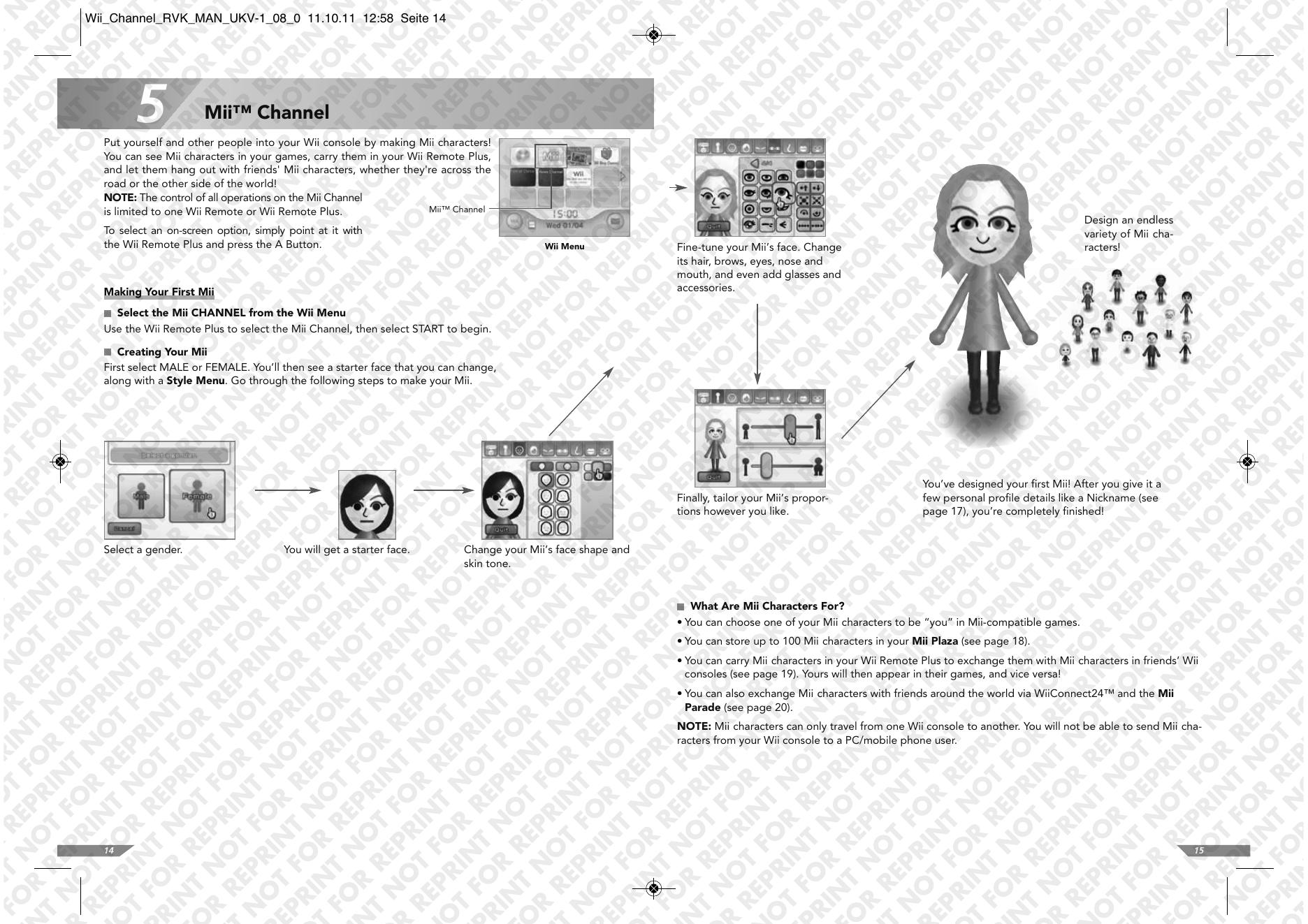
Nintendo’s Wii Channels and Settings manual instructed players to build a Mii by choosing a starter figure and adjusting face shape, skin tone, hair, brows, eyes, nose, mouth, glasses and body proportions. It described the figure as a possible stand-in for “you” in compatible games, with storage for up to 100 characters in the Mii Plaza. Miis could also be carried in a Wii Remote or exchanged between consoles.
Nintendo’s system-menu history records 19 November 2006 for Wii Menu 2.0, the North American launch-day software. That page does not separately say the Mii Channel debuted that day, so the date is launch-era context supported by the bundled channel documentation, rather than evidence for an independently released application.
The human implication
The Mii’s restraint was part of its usefulness. A small set of parts produced a figure legible at menu scale, in a sports game or among a crowd in the Plaza. That consistency let one lightweight identity cross activities without asking a player to learn a character editor for every title.
Simplicity also creates pressure. When an avatar is explicitly offered as “you,” absent hair, skin, facial or body choices become more noticeable than they would on an unrelated fictional character. The manual’s male-or-female starting choice shows how quickly interface structure can turn identity into a required classification. Yet the Mii also demonstrated that recognition does not require photorealism. A few chosen cues can carry affection, family resemblance and humor because the figure leaves room for interpretation. Later platform designers can preserve that ease while expanding who can find a workable likeness and how freely the character can travel.
Sources & limits
Nintendo documentation establishes the Mii creation, reuse and exchange model; the exact channel debut is represented as launch-era.
- Wii Channels & Settings Manual
first-party · Publication date not stated · Retrieved 15 September 2026 - Wii System Menu Update History
first-party · Publication date not stated · Retrieved 15 September 2026
Send a correction with the passage and supporting source.