 View full image ↗
The lobby became somewhere you could walk
On 11 December 2008, Sony said PlayStation Home had entered open beta and would appear under the PlayStation Network column of the PS3's XMB menu. The short launch post asked newcomers to bring a USB keyboard or Bluetooth headset, meet other owners, and explore spaces, rewards, items and activities. A post published the day before added a tutorial, parties, tournaments, events and a redesigned Central Plaza. This was not just a character creator attached to a friends list. Sony was proposing a navigable social layer with an avatar as the player's body inside it.
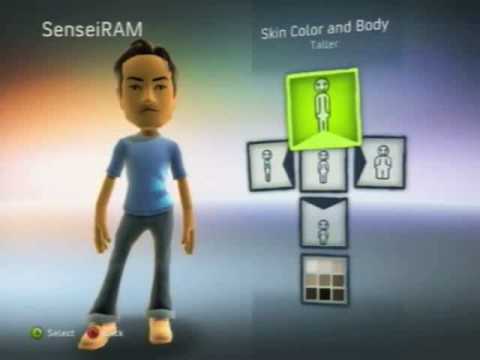
That distinction matters next to the site's account of how Xbox attached a custom body to the console profile. Both systems made stylized people part of a console identity in 2008, but Home gave the figure somewhere to idle, shop, play and encounter strangers. The avatar was not merely displayed; it occupied a place.
A plaza has to explain itself
A social lobby can look lively in a trailer and still feel unreadable when a person arrives alone. Sony's launch guidance exposes the practical work hiding behind the plaza: a tutorial for controls, help menus, communication hardware, event announcements and experienced users who could show newcomers around. Those are wayfinding systems for people, not decorative features. They help answer three quiet questions: What can I do here? Who is available to do it with? How do I join without interrupting?
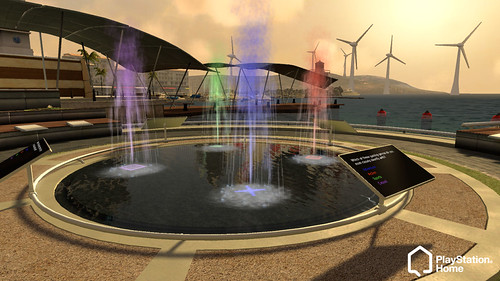
The 2010 Home Square screenshot used here is retrospective, but it makes that design problem visible. The fountain doubles as a polling booth; a news ticker announces activity; nearby buildings lead toward a cinema, bowling and shopping. Architecture carries interface work. A creator planning a virtual venue can borrow the principle without copying the mall: give the avatar an obvious first action and make the next social step visible from where people spawn.
Identity was partly an inventory
Home's launch language paired community with spaces, rewards and items. That pairing meant self-presentation was distributed across a wardrobe and the places where it could be seen. A costume could communicate game fandom; an apartment could become a host's chosen setting; an event reward could signal participation. The system made identity cumulative, but also platform-dependent. If a look relies on a provider's catalog and a social scene exists on its servers, neither is as portable as a screenshot or a model file under the creator's control.
This is an editorial reading of the product structure, not a claim about how every player valued an item. It does suggest a useful audit for any persistent-avatar platform: list which parts of a person's presentation are editable, exportable, purchasable and recoverable. Those four columns are rarely identical.
The practical takeaway is social texture
Home's open-beta announcement cannot prove that every space worked or that its social norms were healthy. Sony published a separate update the next day acknowledging access problems caused by launch demand. The evidence supports a narrower conclusion: Home treated the console lobby as an evolving place where communication, events and content would be ongoing product responsibilities.
For world builders, the durable prompt is concrete. Before adding another customization slider, trace one newcomer journey from spawn to a shared activity. Mark where they learn the controls, discover a reason to stay, recognize what another avatar is doing, and leave with something they can find again. A body editor creates a figure. A legible sequence of places and routines gives that figure a social life.
Sources & limits
Contemporary Sony posts verify the 11 December 2008 open-beta date, communication guidance and launch framing. The 2010 Sony screenshot documents a later Home Square design and is explicitly contextualized as such; the analysis of place, inventory and newcomer flow is editorial interpretation.
- PlayStation Home is Now Live!
first-party · 11 December 2008 · Retrieved 19 September 2026 - PlayStation Home Open Beta Launches Tomorrow
first-party · 10 December 2008 · Retrieved 19 September 2026 - PlayStation Home: New Home Square Unveiled!
first-party · 15 June 2010 · Retrieved 19 September 2026 - PlayStation Home Beta Update
first-party · 12 December 2008 · Retrieved 19 September 2026
Send a correction with the passage and supporting source.