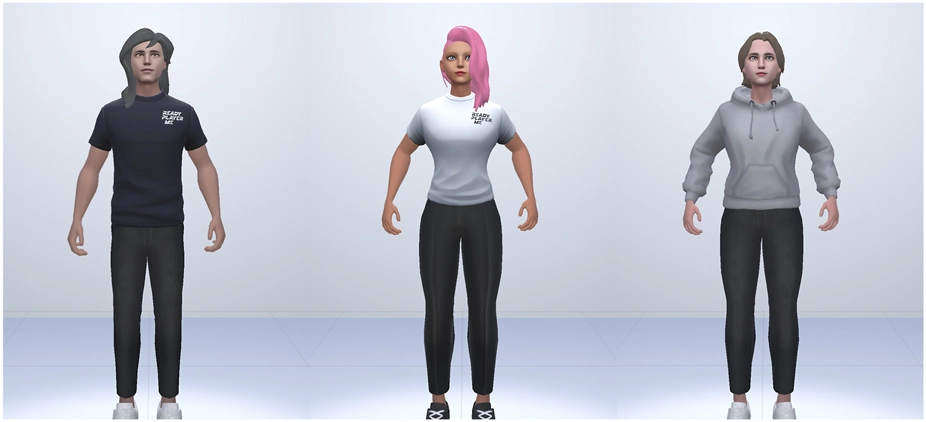
Fifteen students designed around lived communication
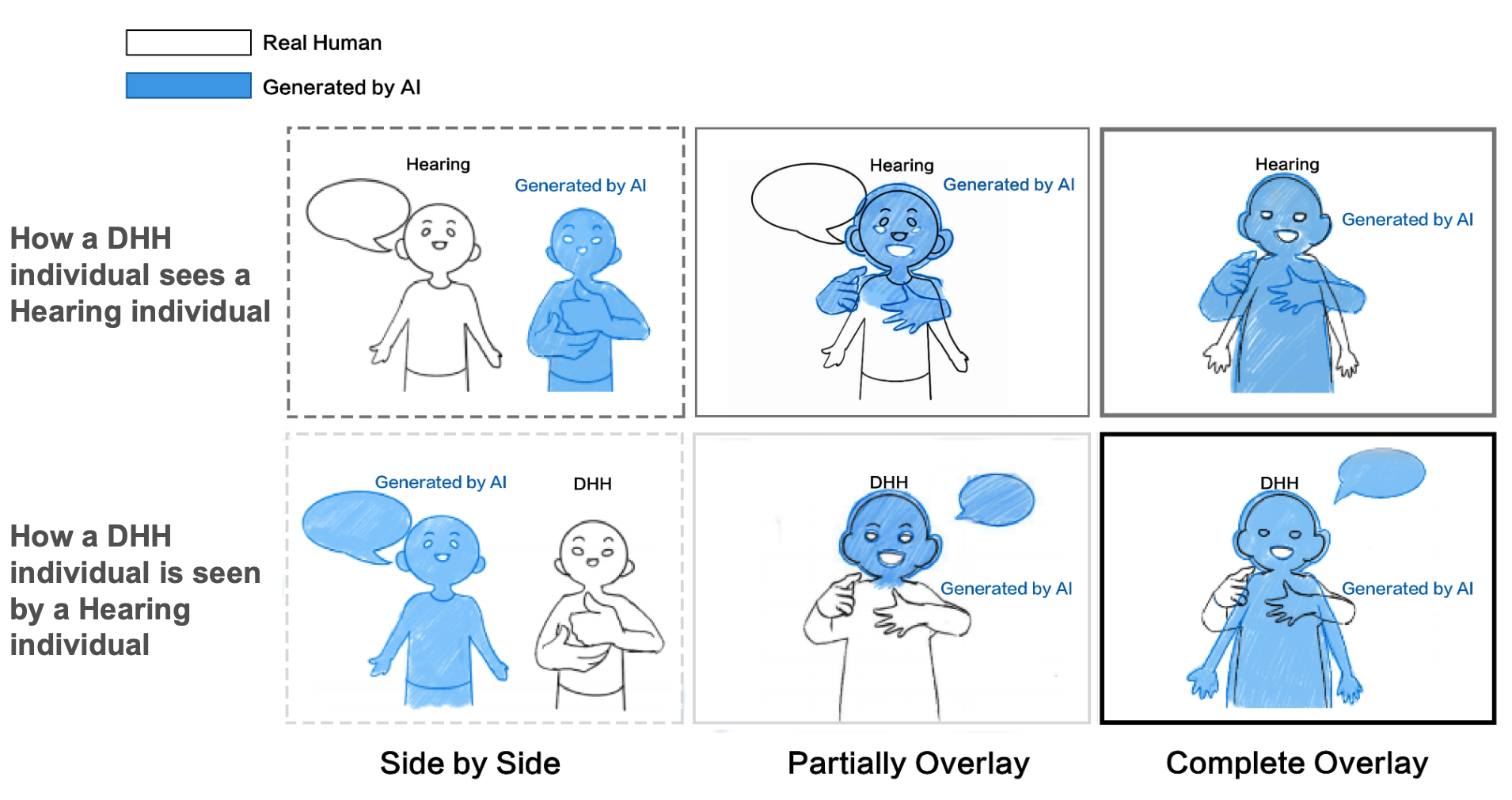
Si Chen and colleagues conducted a three-session participatory design study with 15 d/Deaf and hard-of-hearing students, ages 21 to 47, who could sign. Participants imagined mixed-reality avatars that might interpret between signing and spoken English during face-to-face communication. They discussed separate, partial-overlay and full-overlay presentations, then sketched and reviewed features. Desired controls included avatar location and transparency, signing and voicing style, emotional expression and negotiation with a hearing partner. The study used design-fiction prompts and illustrations; it did not build or validate an automatic interpreter.
Access includes how a translation appears
The proposals show that output placement is a social decision. A separate signing figure may preserve the visible speaker but split attention. An overlay may connect signs to the speaker while covering facial or bodily information. Voice generation raises parallel questions about who sounds like whom and who can change the result. A communication tool therefore needs controls for presentation, correction and consent, not only a language-conversion pipeline.
Negotiation matters because two people share the encounter while experiencing different interfaces. A useful prototype session would let both partners inspect what the other sees, pause a translation, repair an error and choose where generated signs or voice appear. That makes accessibility a property of the exchange rather than a setting silently assigned to one person.
A design agenda is not a performance result
The sample was small, relatively young and familiar with avatar or filter concepts; the authors also note that the initial technology demonstration may have shaped ideas. Participants represented signing DHH perspectives, not every person with hearing loss or hearing communication partners. Most critically, imagined interpreting ability was a prompt. The study supports requirements and questions for future systems. It provides no evidence that generative AI can translate these conversations accurately, preserve ASL grammar, or replace qualified human interpreters.
Sources & limits
Participatory design evidence from 15 signing DHH students; the study elicited requirements with design fiction and did not evaluate a working AI interpreter.
- Customizing Generated Signs and Voices of AI Avatars: Deaf-Centric Mixed-Reality Design for Deaf-Hearing Communication
original-research · 2 October 2024 · Retrieved 15 September 2026
Send a correction with the passage and supporting source.