What happened
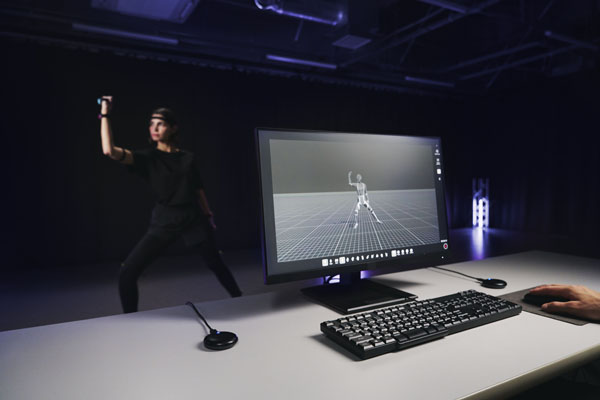
Sony launched the XYN spatial-content suite at CES 2025 and introduced XYN Motion Studio as its motion-production application. Professional mode connected twelve mocopi sensors through dedicated receivers, doubling the six sensors in a standard mocopi set. Sony also named automatic motion interpolation, auto-tagging and editing functions intended to make captured movement easier to find and reuse in film, animation, games and virtual performance.
The shift from mobile capture to a managed studio workflow changes what small teams can preserve. Motion is not only recorded; it becomes a searchable library that can be cut, corrected and applied later. That can lower production friction for avatar performers, but it also separates movement from the moment and person who created it.
The human implication
Reusable motion needs provenance. A clip should retain performer credit, consent terms, capture date and the transformations applied after recording. Auto-interpolation is especially important to disclose within production: the system may create movement between sensed points that looks intentional even when it was inferred. Editors need a way to distinguish original capture from correction and reuse.
Sony's release establishes the announced hardware configuration and software functions, plus planned late-March availability. It does not measure capture accuracy, compare six- and twelve-sensor results or describe performer-rights controls. Those are necessary evaluations before claims about faithful embodiment. The practical value is the integrated path from affordable sensors to editable production data; the practical risk is motion becoming an unlabelled, detachable asset. Searchable libraries should make those restrictions searchable too, so a convenient clip cannot outrun the conditions under which it was recorded.
Sources & limits
Sony documents XYN Motion Studio's configuration and planned workflow; accuracy, rights controls and production outcomes are not established.
- Launch of XYN™, an integrated software and hardware solution designed to support the creation of spatial content
first-party · 7 January 2025 · Retrieved 15 September 2026
Send a correction with the passage and supporting source.