Fixed and adjustable versions on HoloLens 2
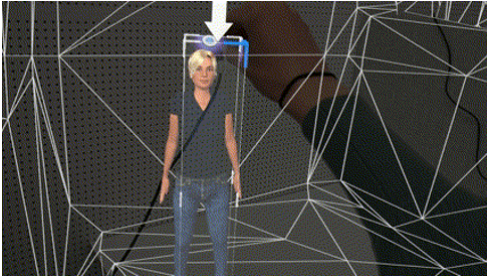
Fenya Wasserroth and colleagues evaluated fixed and adjustable versions of a German Sign Language avatar on Microsoft HoloLens 2. Nine sign-language users participated; eight completed the study and contributed quantitative data, while the ninth contributed qualitative feedback. Participants could alter the avatar’s size, spatial position and orientation. On average, they understood less than half of the tested sentence parts. Adjustability produced no significant improvement in comprehension or overall user experience. Participants preferred having settings in principle, but the adjustable condition brought greater effort, frustration and stress.
Choice depends on a legible baseline
Customization can solve a mismatch only when the underlying message is readable. Moving an avatar or slowing its motion cannot restore missing mouthings, correct an indistinct handshape or add necessary facial grammar. The study’s observed failures make a useful order of operations: establish linguistic comprehensibility, make controls discoverable, provide clear feedback, and then test whether personal settings improve a specific task.
The higher workload also warns against treating more controls as automatic accessibility. Every adjustment asks the user to diagnose a problem, learn a gesture and judge the result while trying to understand the message. Defaults should carry the basic communication burden. Settings can remain available without making repair the recipient’s job.
Preference and performance answer different questions
Nine participants at one Deaf-culture center provide focused formative evidence, not a population estimate. The prototype used stored sentences and had acknowledged animation and interaction problems; those defects may have overwhelmed any benefit from adjustment. Preference for control still matters because acceptability and agency affect whether a system is used. It does not demonstrate better understanding. Future evaluations should report both measures, include complete nonmanual features, and test whether gains survive the added time and effort of configuration.
Sources & limits
Small formative comparison with nine sign-language users and eight complete quantitative records; preference for settings did not translate into significant comprehension or UX gains.
- Evaluation of a Sign Language Avatar on Comprehensibility, User Experience & Acceptability
original-research · 7 August 2025 · Retrieved 15 September 2026
Send a correction with the passage and supporting source.