More ways into the room
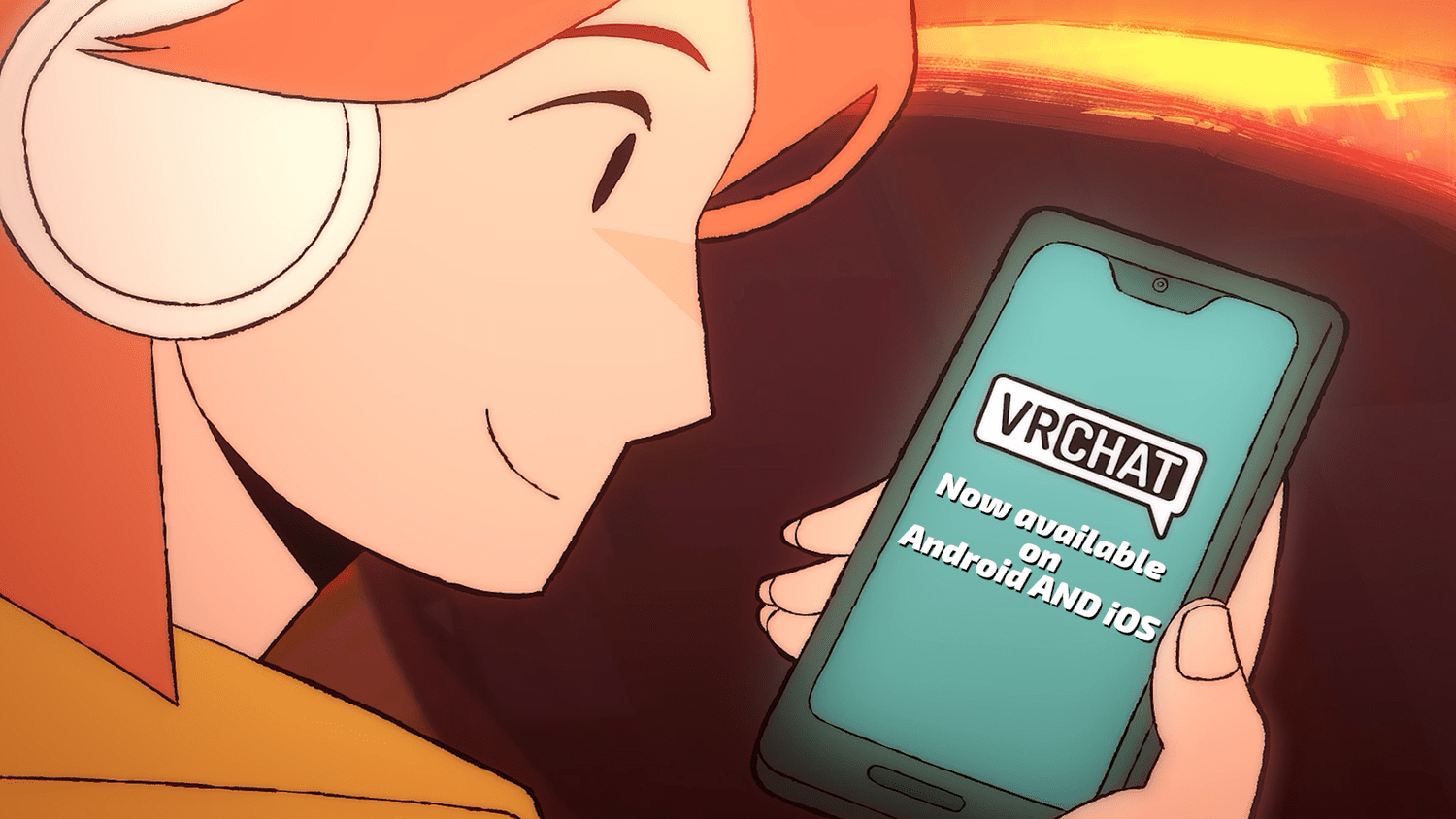
VRChat announced iOS and Android availability on October 24, 2025. The post set out the mobile requirements: iOS 17 or later; iOS devices with less than 6GB RAM limited to the Companion; Android 10 or later; and Android devices with less than 6GB RAM unable to install. There was an animated launch trailer too. The RAM details are part of the actual story, because “mobile” is not one audience. Some people get the full client, some get the Companion route, and some have no route in at all.
For avatar culture, that changes who is around a performance. A character designed for headset-level proximity may now meet someone through a smaller screen, touch controls or a lower-capability device. More people may be able to enter a world, while creators have to think about readability, comfort and performance beyond the usual headset-and-PC assumptions. The crowd gets bigger, but it does not experience the same thing in the same way.
An install is not the whole access story
Access is more than an install button. Hardware requirements can shape whose presence is first-class, who is observing, and whose social timing is limited. Mobile can make an avatar community more reachable for people without VR hardware, but it can also expose the gap between a creator’s intended embodiment and a viewer’s actual interface. Designing for that gap means being clear about what an experience asks of people, instead of treating a technical floor as somebody’s personal failure.
VRChat’s announcement confirms mobile availability and the stated device limits. It does not establish participation patterns, accessibility outcomes or parity between mobile and headset experiences. Those questions need observation after launch. A download can be a door, but it does not by itself tell us whether someone gets meaningful access once they are inside.
Sources & limits
VRChat confirms mobile availability and requirements; it does not prove access parity or user outcomes.
- VRChat is Now Available on iOS and Android!
first-party · 24 October 2025 · Retrieved 15 September 2026
Send a correction with the passage and supporting source.