A signal reaches the avatar
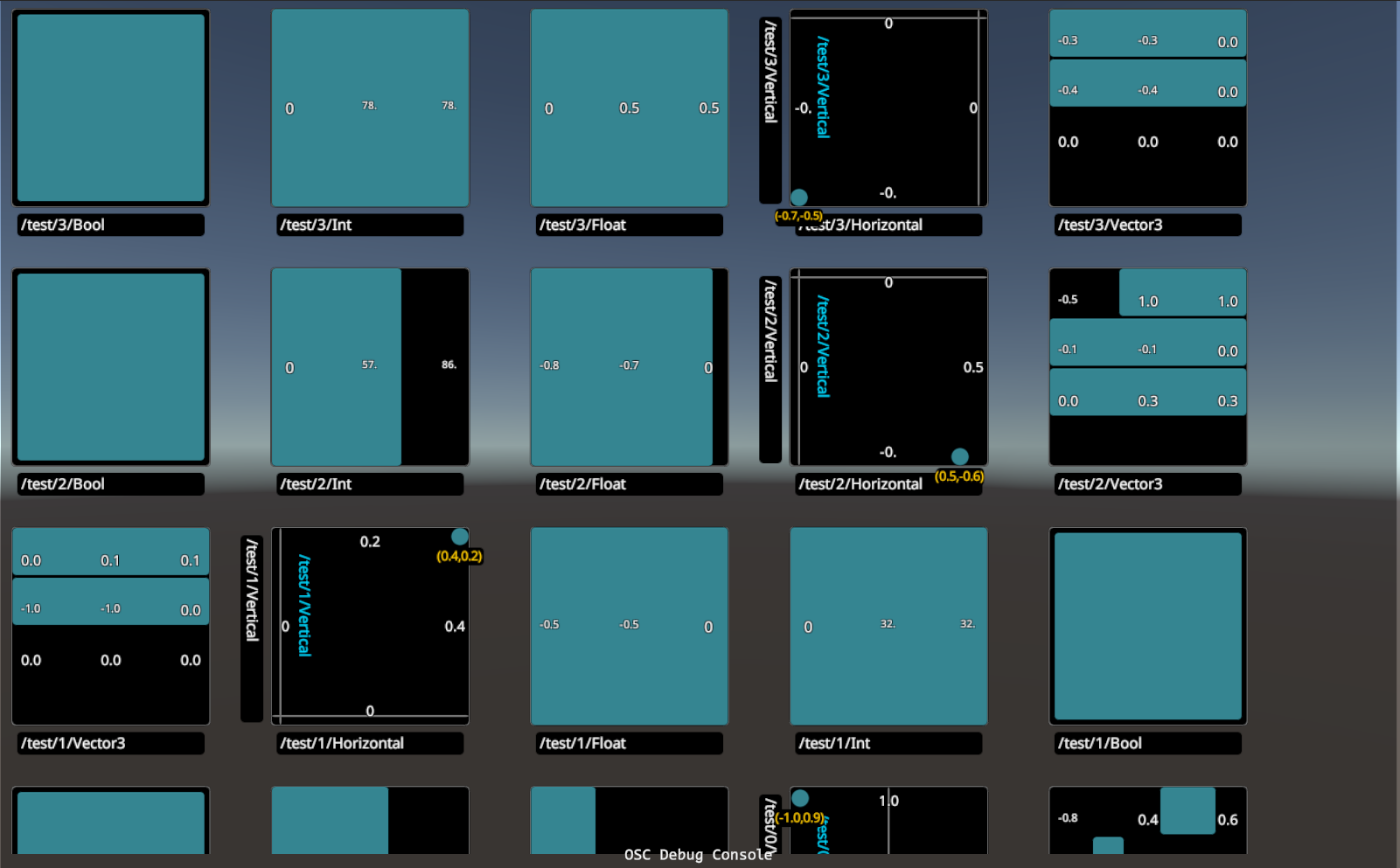
The official debug view looks like a wall of little meters: addresses, numbers and blocks changing with incoming signals. It is a useful picture of VRChat's OSC addition, because the feature is about values moving between programs. VRChat's 2022.1.1 update went live on 24 February 2022 with Open Sound Control support for avatar parameters and user input. OSC is a message protocol familiar to music and interactive systems. In VRChat, compatible external software could send parameter values into an avatar and receive values back.
VRChat suggested examples ranging from a drum pad moving avatar ears to face tracking and phone sensors controlling expressions. Those examples were possibilities, not a list of hardware that VRChat itself certified. The release notes said the API was available on PC and Quest, with a Quest setup pointing the OSC application at the device's network address. A debug menu gave makers a way to inspect traffic. That last detail is modest but important: a creator needs to know whether a signal arrived before deciding that the rig or the tracking app is wrong.
Why an open channel changes performance
Headset and controllers tell an avatar only part of a performer's story. An external control channel can bring in a deliberate button press, a tracker value or a cue from a custom piece of software. The creative move is mapping that signal to a meaningful expression. An ear twitch might be a joke, a channel alert or an accessibility shortcut; the protocol alone does not make the gesture good. Makers still have to set parameter ranges, smooth noisy inputs and decide which motions an audience can read.
OSC also makes the boundary between avatar and local software more consequential. VRChat's blog warned users to be careful with third-party programs, and the official docs describe address-based parameter control. A sensible workflow treats external apps as part of the performance setup, with careful configuration and testing. This is a historical account of the 2022 live release, not a claim that every later OSC endpoint or device existed then. The durable question is what creators can build when a platform exposes a small, inspectable bridge to their own tools.
Sources & limits
VRChat's blog and release notes establish the live date, parameter/input support and examples; example devices are illustrative, not certified outcomes.
- VRChat OSC for Avatars
first-party · 16 February 2022 · Retrieved 16 September 2026 - VRChat 2022.1.1
first-party · 24 February 2022 · Retrieved 16 September 2026 - OSC Debugging
first-party · Publication date not stated · Retrieved 16 September 2026
Send a correction with the passage and supporting source.