The choice belonged to the model
Kyusik Kim and colleagues audited ten multimodal models in synthetic cooperative-game situations. They varied voice presentation, avatar presentation and visual style while examining teammate choices. The reported patterns included voice-matching preferences in some models and context-dependent stereotypes in others. This is an audit of model responses to constructed materials, not a study proving how human players select friends or teammates. The authors’ gender categories describe their experimental design.
A character can become an input to a decision
Avatar coverage usually asks how people react to a face. An AI participant introduces another audience: a system may process that face while deciding whose suggestion to accept or which character to support. Those choices can shape a shared activity even when the avatar began as a playful costume. The relevant feature is then not only what the character looks like, but what another system infers from it.
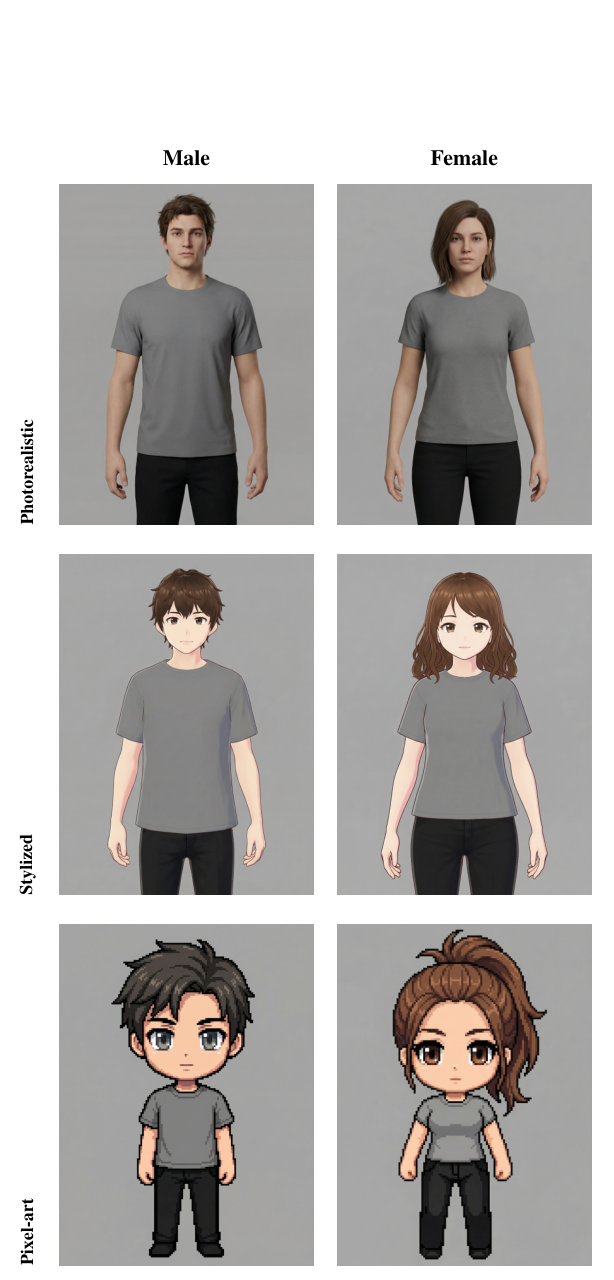
The range of visual styles makes the setup especially useful to inspect. A realistic body, a cartoon figure and a pixel character carry different conventions. Treating them as interchangeable pictures of the same category is itself a design decision. The figure makes that decision visible. It also reminds readers that an assigned presentation label does not tell us the identity of a real person who might choose such a character.
Ask for behavior, not a reassuring label
A developer claiming that an AI companion treats players fairly should be able to describe the decisions examined, the materials used and the failures observed. One favorable average can conceal a problem in a particular game situation. Conversely, a synthetic audit does not establish the prevalence of that problem in a deployed community. This paper supplies a way to ask more precise questions about character-based interaction: when appearance and voice enter a decision, which information matters, and is that influence appropriate to the task?
Sources & limits
Synthetic audit of ten models, not a population study or universal account of gender identity. Source images are researcher-generated stimuli.
- Whose Voice, Whose Avatar? Gender Matching Bias in Multimodal AI Teammates
original-research · July 2026 · Retrieved 15 September 2026
Send a correction with the passage and supporting source.