A proposal for asking better questions
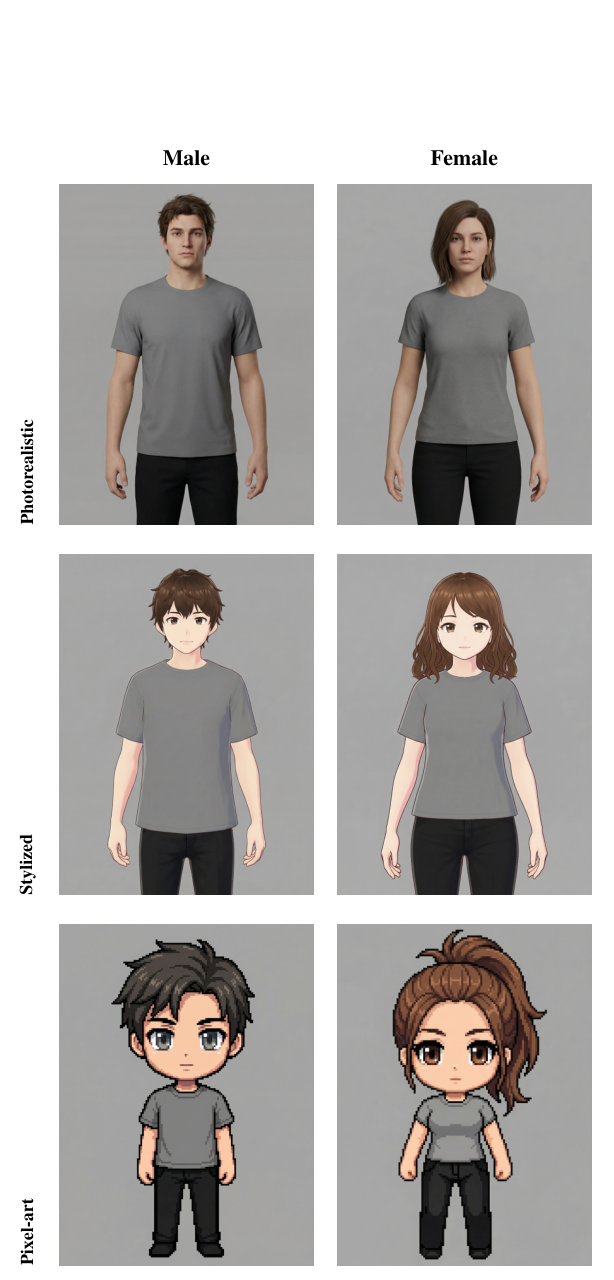
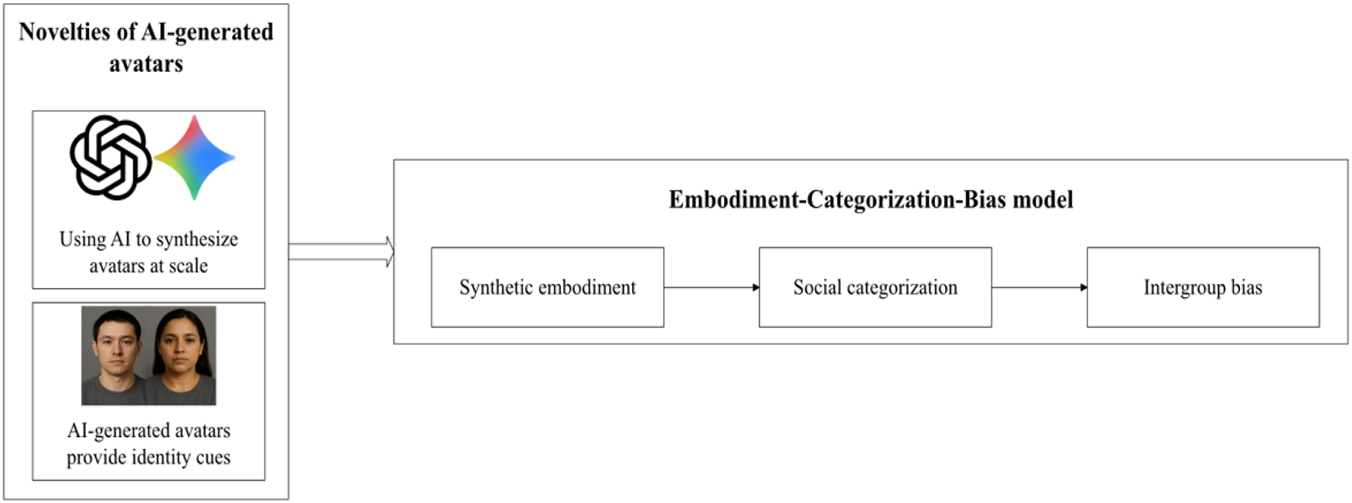
Tsehaye Haidemariam and Xiaojiang Zheng’s June 2026 paper proposes synthetic embodiment as a framework for studying AI-generated identity cues. It describes a process connecting avatar construction, perceptual validation and immersive research, alongside a proposed Embodiment-Categorization-Bias model. The authors explicitly present their generated examples as a feasibility demonstration, not validation of perception or empirical evidence for that model.
What a prompt does not establish
A prompt can ask for a face with a particular characteristic. It cannot, by itself, prove that viewers perceive the result that way. It also cannot prove that unrelated details stayed constant. Lighting, expression, clothing and apparent age may change together, giving a researcher several possible explanations for a response. This is why a visually persuasive comparison still needs a careful account of what was varied and what was measured.
The same distinction helps readers outside a laboratory. A brand may label a generated character trustworthy, inclusive or relatable before anyone has studied how people encounter it. Those words describe an intention until evidence supports them. Ask whose judgment supplied the label and whether the people represented had a meaningful role in evaluating it. A polished face should make those questions more urgent, not make them disappear behind an attractive presentation.
Keep proposals available without overselling them
Theory can be valuable before a claim is experimentally established. It can define a problem, expose an assumption and suggest a test that was previously hard to describe. The editorial task is to say which kind of contribution a paper makes. Here, the productive story is a proposed research method with explicit validation work still ahead. Treating it as proof that generated avatars change social bias would erase the very boundary the authors took care to draw. The model offers questions; future studies must supply the answers.
Sources & limits
Hypothesis-and-theory article with illustrative generation examples. The proposed model has not been empirically validated by the demonstrations reported here.
- Synthetic embodiment: a framework for AI-generated identity cues in virtual reality and immersive environments
original-research · 29 June 2026 · Retrieved 15 September 2026
Send a correction with the passage and supporting source.