What happened
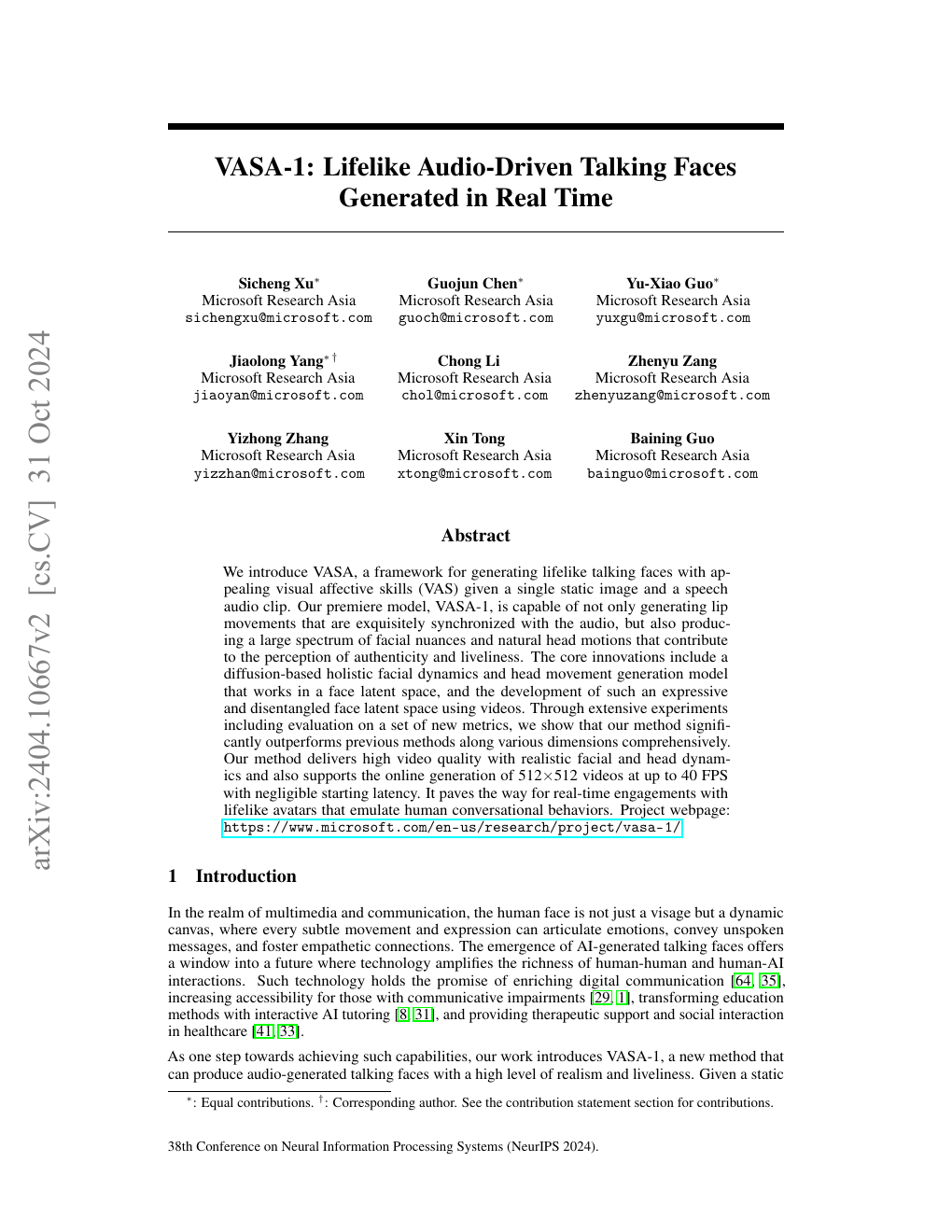
Microsoft Research published VASA-1 in April 2024, describing a system that generates a talking-face video from a single portrait and speech audio. The paper separates facial dynamics and head movement from identity and other image features, and reports controls for gaze direction, head distance and emotion. Its project page presents examples but states that the team has no plan to release a product, demo, API or implementation until it can be confident the technology will be used responsibly.
That refusal is part of the project, not a footnote. A one-image input lowers the distance between possessing someone's photograph and producing an apparently performed message. Controls can help an artist direct a consenting character, while the same separation of identity and motion can make it easier to assign expression and speech to a person who never supplied them.
The human implication
Talking-face research often evaluates visual and audio behavior, but identity harm occurs outside those measurements. A clip can be technically imperfect and still mislead, embarrass or burden the person depicted. Responsible evaluation therefore needs to include consent provenance, disclosure that survives reposting, revocation paths and the likely cost of proving a fake is fake. The subject's interests cannot be reduced to output quality.
The sources establish the research architecture, reported capabilities and the stated non-release position. They do not establish real-world robustness, a deployed safety system or immunity from misuse by comparable methods. This is also a distinct project from the existing Avatar Dispatch research records: its exact research ID is arXiv:2404.10667. The most useful lesson is institutional as well as technical: demonstrating a capability does not require making it frictionless to apply to anyone's face.
Sources & limits
The paper and project page support the reported research and non-release stance; they do not establish deployment outcomes or comprehensive misuse prevention.
- VASA-1: Lifelike Audio-Driven Talking Faces Generated in Real Time
first-party · 16 April 2024 · Retrieved 15 September 2026 - VASA-1: Lifelike Audio-Driven Talking Faces Generated in Real Time (arXiv:2404.10667)
primary-research · 16 April 2024 · Retrieved 15 September 2026
Send a correction with the passage and supporting source.