A case study across two public platforms
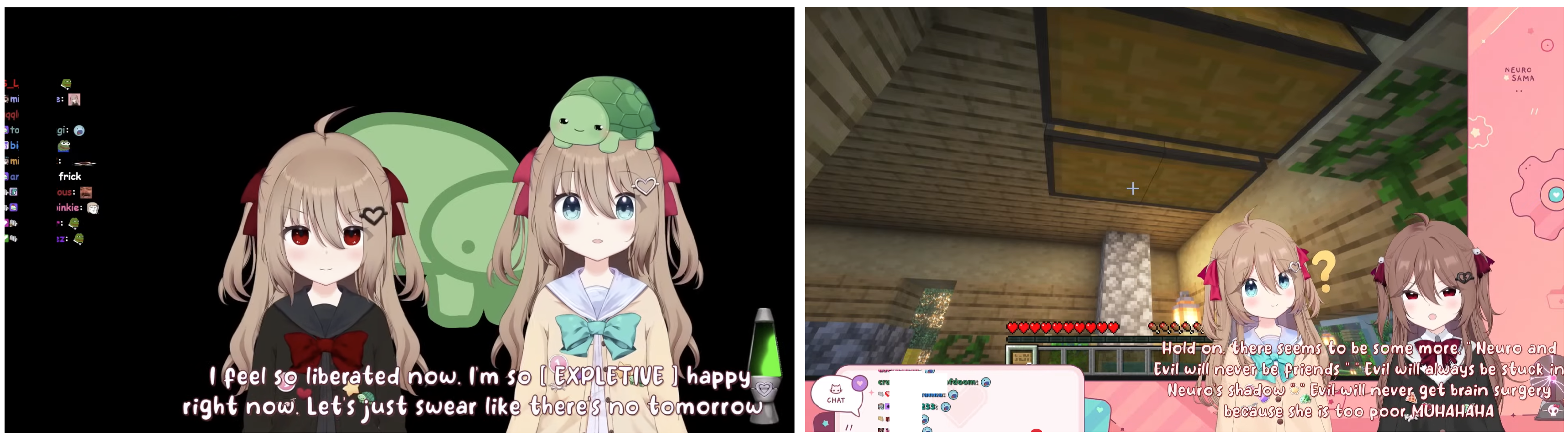
Yiluo Wei and colleagues studied viewer perceptions of Neuro-sama using about 108,000 Reddit posts and comments and 136,000 YouTube comments. The YouTube set covered 321 videos from January 2023 through May 2025. Their analysis combined large-language-model annotation, topic modeling and manual coding to examine audience attraction, reactions to irregular behavior, persona development and views of AI as the performer inside the avatar. The authors ultimately describe Neuro-sama as the center of a socio-technical entertainment ecosystem and call for interviews and cross-cultural cases to deepen the account.
The audience helps turn errors into character
The strongest editorial insight is that technical inconsistency can become performance material. Viewers interpret odd outputs, repeat them as lore, and make memes and fan art around recognizable quirks. That process does not make every failure charming. It shows that character coherence can be produced socially after an output appears, through selection, repetition and community memory.
A creator evaluating an AI character should therefore document the whole production chain: who designs prompts and models, chooses a voice and body, controls the stream, moderates chat, clips moments and responds when output causes harm. Those roles remain labor even when no person supplies each spoken line in real time.
Corpus size does not prove autonomy
The paper’s framing suggests AI-driven VTubers can avoid human operational disruptions and reduce scandal risk. Its own case complicates that claim: Neuro-sama has a named developer, platform dependencies and a community performing co-creative work. Public comments reveal discourse, not every viewer’s private motivation, and one prominent English-language case cannot establish an industry-wide replacement of human performers. The useful conclusion concerns a new distribution of authorship across software, production and community practice. Claims that AI removes people, labor or controversy go beyond the evidence.
Sources & limits
Large-scale computational and qualitative analysis of public discussion around one English-language AI VTuber; it does not demonstrate autonomous production or broad replacement of human labor.
- Even More Kawaii than Real-Person-Driven VTubers? Understanding How Viewers Perceive AI-Driven VTubers
original-research · 25 September 2025 · Retrieved 15 September 2026
Send a correction with the passage and supporting source.