The experiment behind the phrase
Nick Yee and Jeremy Bailenson’s 2007 paper reported two experiments in immersive virtual environments. Participants assigned avatars rated more attractive behaved differently in a disclosure and distance task; participants assigned taller avatars negotiated more confidently than those assigned shorter ones. The authors called this relationship between self-representation and behavior the Proteus effect. These were assigned appearances and specific laboratory tasks, not observations of an entire platform community.
What a character can invite
The interesting cultural question is what a body makes available to its wearer. An avatar can suggest a posture, a manner, or permission to try something unfamiliar. That does not make appearance a command. A performer still brings experience, habits, relationships, and an audience into the scene. The same design can feel playful in a game and exposing in a work call. Context belongs beside the character sheet.
For a creator, this suggests an experiment in craft rather than a promise of psychological improvement. Rehearse the same short scene with two silhouettes. Notice which gestures feel legible, which jokes depend on scale, and which expressions seem natural to repeat. Those observations can inform a role. They cannot demonstrate that changing a model will make somebody confident, successful, or more sociable outside that rehearsal.
Keep the limits in the picture
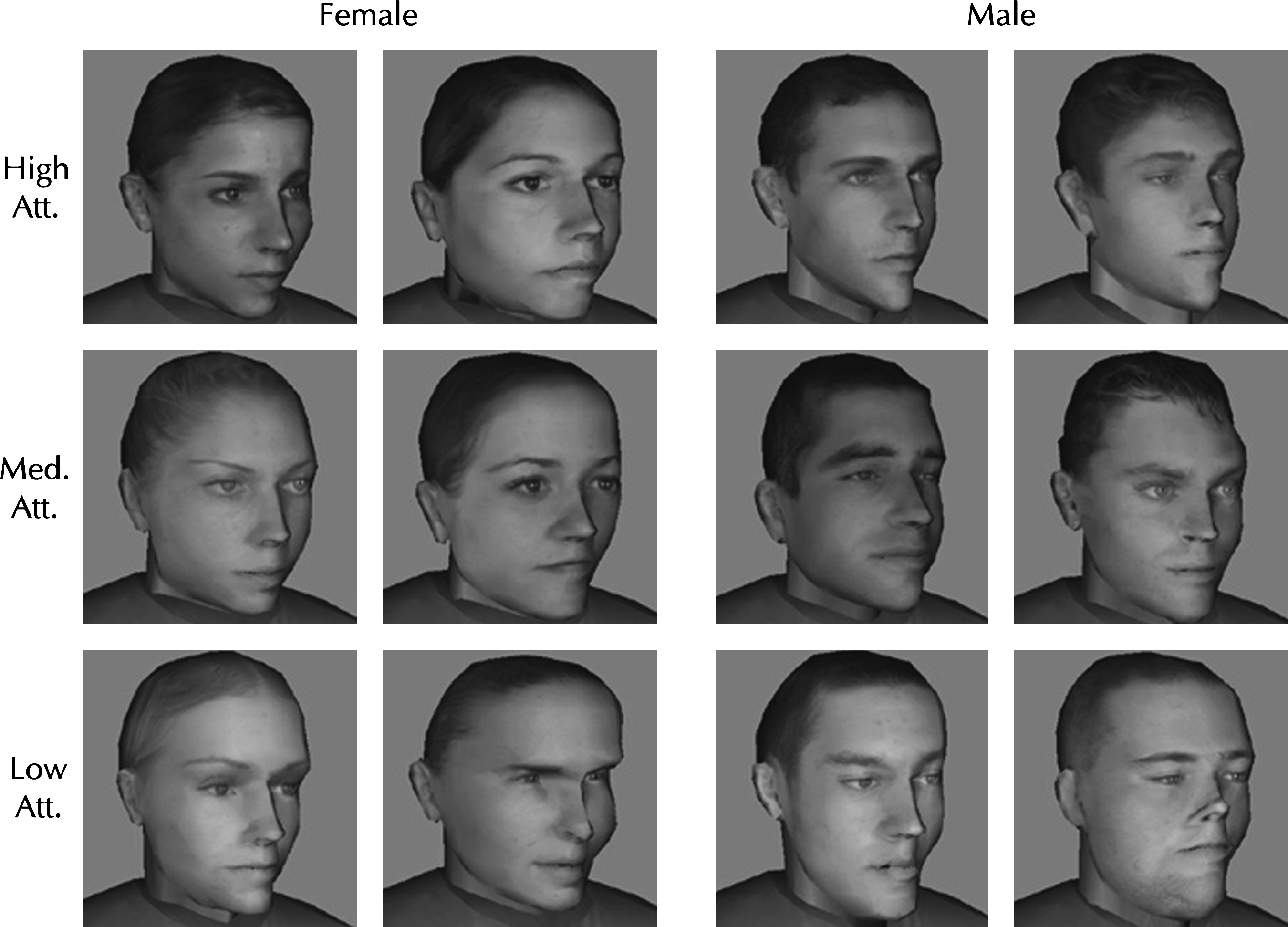
The original face materials also show how a study’s available bodies shape its question. The paper used a restricted set of faces and binary gender categories. Reading the result today means looking at those choices, not smoothing them into a claim about every possible identity. Ask what was manipulated, what behavior was measured, and how long the effect was observed. A memorable name can help a finding travel; the method should travel with it.
Sources & limits
Foundational experimental evidence with restricted materials and tasks. This reading does not claim a universal, durable or therapeutic effect.
- The Proteus Effect: Self transformations in virtual reality
original-research · 2007 · Retrieved 15 September 2026
Send a correction with the passage and supporting source.