Survey scenarios, followed by interviews
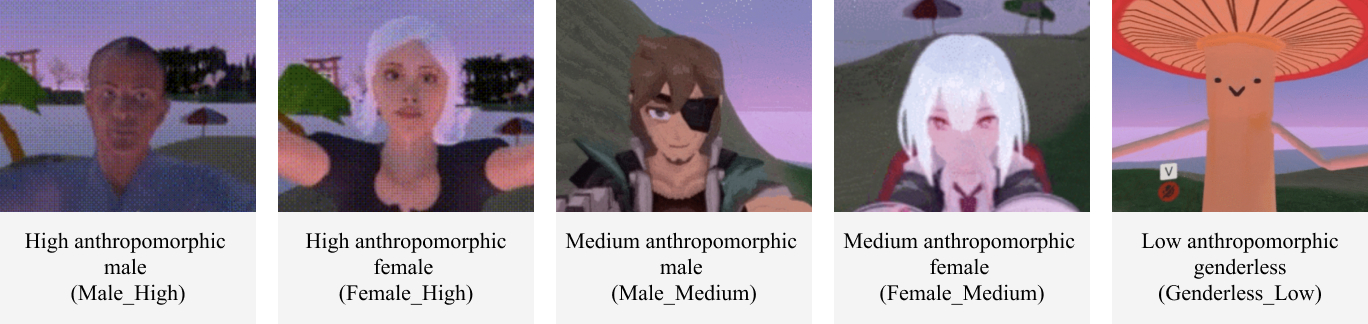
Xuetong Wang, Ziyan Wang and colleagues surveyed 166 VR users in China and interviewed 18 social VR users about potential sexual harassment. Survey respondents rated 25 scenarios that varied an avatar’s behavior and one of five appearances spanning gender presentation and anthropomorphism. The study found broad agreement about harassing conduct, while appearance and its interaction with behavior also affected ratings. Respondents tended toward non-confrontational reactions; interviews explored those choices and views of platform governance. These were described scenarios with selected avatars, not observed incidents inside live worlds.
Moderation must anchor on conduct
The finding creates a difficult platform problem. People use visual cues to assess intent and danger, but those cues can carry gender stereotypes, familiarity effects and suspicion of unfamiliar bodies. A reporting flow should let someone describe what happened without forcing them to classify the other avatar’s realism or gender. Moderation guidance can then focus on contact, speech, persistence, consent and evasion of boundaries while retaining appearance as context supplied by the affected user.
The same distinction helps safety teams audit automated systems. If a detector or reviewer treats a particular body style as evidence of risk, it may reproduce the bias the study documents. Test equivalent conduct across varied avatars, publish the behavioral rule, and give users fast controls for distance, blocking and exit.
Perception is not culpability
The study shows how participants judged constructed situations. It does not show that one avatar category causes more harassment or that people wearing it are more dangerous. Its recruitment context, five chosen designs and questionnaire framing limit transfer to other communities. The responsible reading keeps two truths together: perceived harm matters to user safety, and appearance-based judgments should not become a shortcut for deciding guilt. Platform evidence still has to describe behavior.
Sources & limits
Mixed-methods evidence from 166 survey responses and 18 interviews about constructed social VR scenarios; it measures perceptions and response preferences, not incident rates or culpability.
- Avatar Appearance and Behavior of Potential Harassers Affect Users' Perceptions and Response Strategies in Social Virtual Reality (VR): A Mixed-Methods Study
original-research · 2 October 2024 · Retrieved 15 September 2026
Send a correction with the passage and supporting source.