What happened
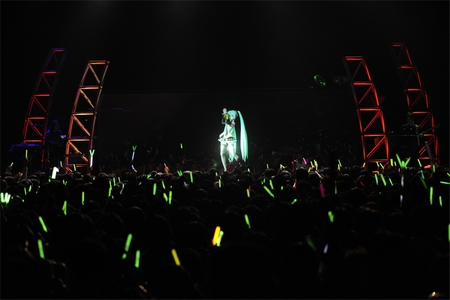
On 9 March 2010, Sega hosted Miku no Hi Kanshasai at Zepp Tokyo with Crypton Future Media participating as a special collaborator. Crypton’s illustrated report shows a packed room, green light sticks, live musicians and animated performances by Hatsune Miku, Kagamine Rin and Len, and Megurine Luka. The report says the encore brought the program to 39 songs.
The record is valuable because it shows the practical assembly of a virtual concert. The projected character did not perform alone: songs, animation, stage systems, musicians and audience response had to meet at a scheduled place and time. Crypton’s article is promotional and emotionally enthusiastic, so it supports what was staged and photographed, not a neutral verdict about realism or reception.
The human implication
A virtual singer changes which parts of a concert can be stable and which remain live. The character design and programmed motion can be repeated, yet the band, room, timing and crowd still make a particular night. Presence comes from coordination among media and people rather than from a performer’s physical body occupying center stage.
That coordination expands the credit problem introduced by character-based software. The public figure is instantly legible, while the animators, motion editors, musicians, technicians and original song creators can be less visible. A responsible account of digital performance should resist treating the avatar as self-operating. It should also avoid dismissing the event as merely a screen: attendees direct attention, light and sound toward a shared figure in real time. The 2010 report captures that social arrangement and provides visual evidence of the stage, while leaving open how individual spectators interpreted it.
Sources & limits
Crypton’s illustrated report establishes the date, packed venue, animated performances, guests and 39-song program; its enthusiastic impressions are not independent audience research.
- Miku no Hi Kanshasai report
first-party · 15 March 2010 · Retrieved 15 September 2026
Send a correction with the passage and supporting source.