Distance and expression were separate conditions
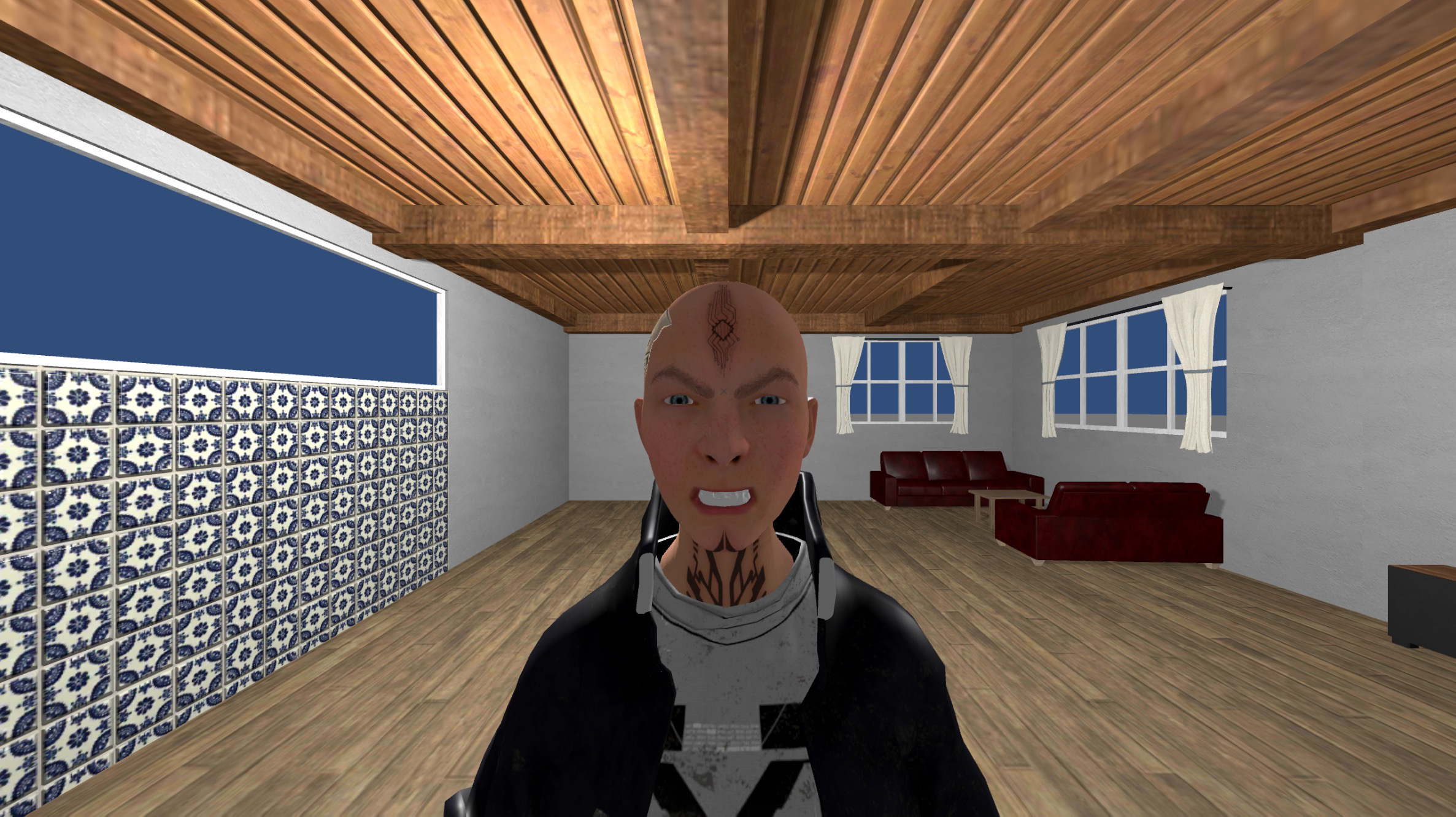
Birgit Nierula and colleagues studied 16 participants interacting with a virtual agent. The experiment varied whether it respected or entered a personally calibrated distance, alongside neutral or angry facial expression. The authors report different patterns across physiological and reported responses: when personal space was violated, skin-conductance responses were stronger during standing than approach, while angry expressions affected other measures of discomfort and response. These signals were measured in controlled conditions, not used to read an individual’s emotions with certainty.
The greeting begins before the speech
A virtual host can have excellent facial animation and still make an encounter uncomfortable by appearing too close. Distance determines how much of a face fills the view and whether the visitor can comfortably look away. It also changes the meaning of a gesture. An arm movement that reads as an invitation across a room may feel intrusive directly in front of someone.
This gives designers a concrete rehearsal task: examine approaches, pauses and retreats alongside dialogue. Can a visitor create more distance? Does the host follow them back into the same position? Is an exit easy to recognize? Those are questions raised by the study, not a tested design prescription. They shift attention from producing the most expressive character to making the encounter adjustable by the person experiencing it.
One distance will not fit every scene
The personal calibration is an important part of the method. A fixed number lifted out of a paper would erase the very variation the experiment tried to accommodate. A crowded concert, a quiet tutorial and a conversation with a familiar friend also make different demands. Physiological measurements can contribute evidence, but they do not supply a universal comfort setting. For avatar producers, the useful lesson is to treat movement through shared space as part of the character’s performance and to ask visitors about the complete encounter.
Sources & limits
Sixteen-person controlled experiment; physiological responses are not a diagnosis, an emotion detector or a universal spacing rule.
- Differential Physiological Responses to Proxemic and Facial Threats in Virtual Avatar Interactions
original-research · 14 August 2025 · Retrieved 15 September 2026
Send a correction with the passage and supporting source.