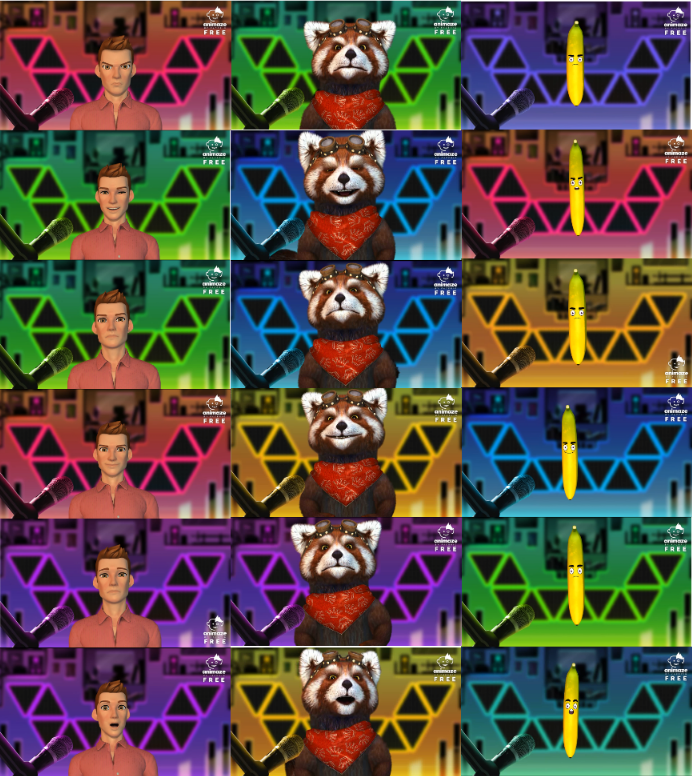
Six emotions, some very different faces
Shiyao Zhang and colleagues examined six acted emotions after video was mapped onto animated avatars. A preliminary study had four participants view 18 clips across human, raccoon and banana characters. A follow-up had 11 new participants view 30 clips across five characters, adding pig and shark avatars. Participants first identified the displayed emotion and then rated their own emotional response and confidence. The authors report differences associated with the characters and suggest that human likeness, cuteness and a character’s neutral facial appearance may all matter. The paper presents these as initial results.
A body changes the signal before the performance begins
The comparison makes a practical point for animators: retargeting the same captured expression does not guarantee the same readable result. A muzzle, fixed smile, eye shape or lack of familiar facial anatomy changes the visual baseline against which movement is judged. Testing only whether tracking succeeded misses whether an audience can distinguish fear from surprise or a neutral pose from happiness.
That suggests a character-specific expression pass. Ask viewers to label short silent clips, note common confusions, and adjust poses rather than assuming one universal set of blend shapes. Confidence belongs beside accuracy: a confidently misread emotion creates a different communication risk from an ambiguous one.
Human likeness is bundled with other features
The study cannot isolate a single human-likeness dial. These five characters also differ in species cues, cuteness, geometry, texture and resting expression. The preliminary group had four people and the follow-up had eleven, so rankings are fragile and culturally situated. Tracking limitations, including eye recognition, could further change what each avatar displayed. The work supports testing expressive legibility for each body. It does not prove that raccoons communicate emotion better than people, or that bananas are inherently poor avatars.
Sources & limits
Initial within-subject evidence from four participants and an eleven-person follow-up; character design variables are bundled, so broad species or human-likeness rankings are not established.
- Examining the Effects of Human-Likeness of Avatars on Emotion Perception and Emotion Elicitation
original-research · 3 August 2025 · Retrieved 15 September 2026
Send a correction with the passage and supporting source.