Hair, ears and wings become interactive
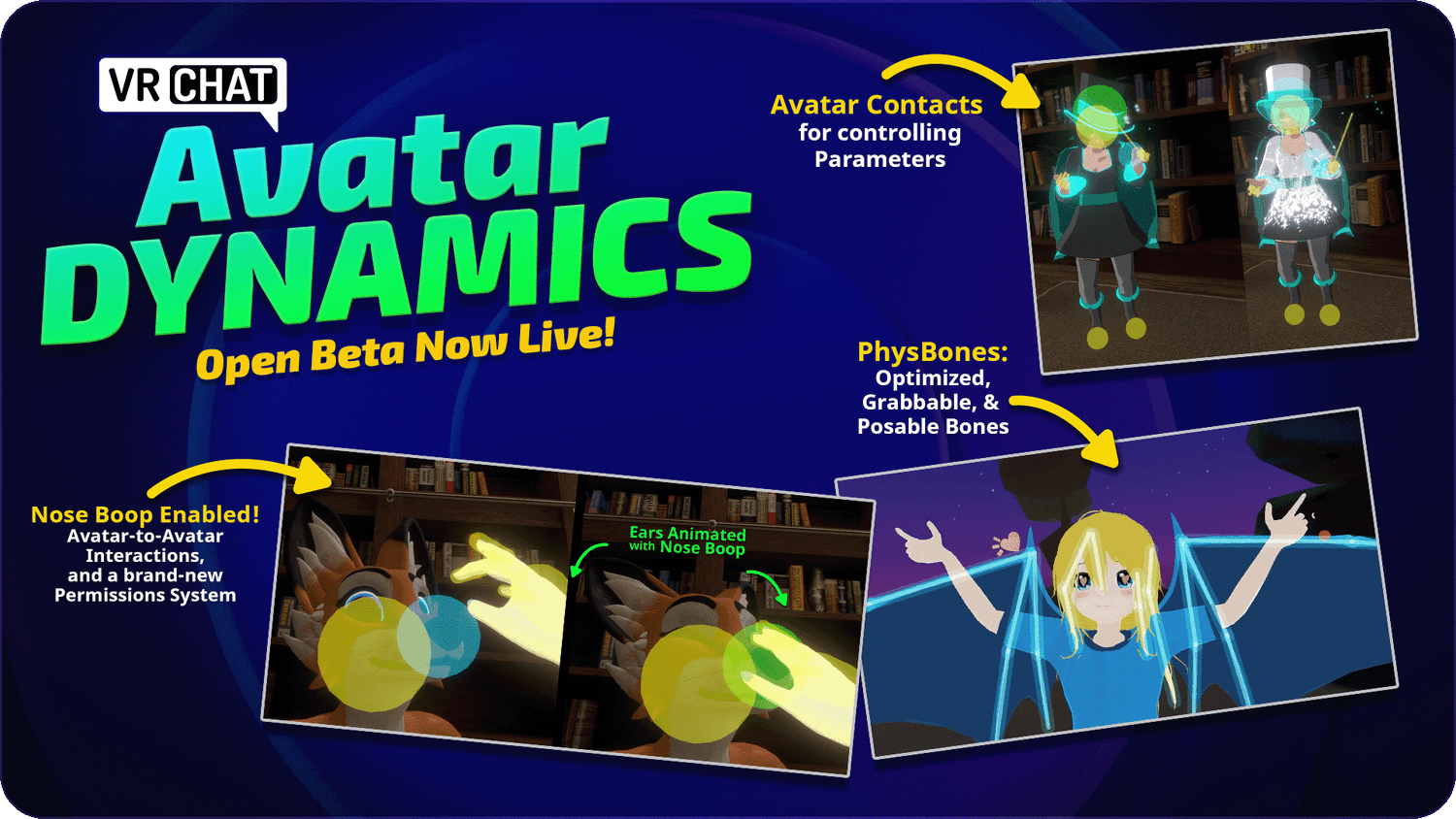
The beta illustration points to a headpat, animated ears and poseable wings. It is busy for a reason: VRChat's Avatar Dynamics combined several systems that made an avatar more responsive to motion and contact. The platform's 2022.1.2 build released on 21 April 2022, moving Avatar Dynamics out of beta. PhysBones gave makers a native way to set up simulated movement for parts such as hair, clothing and appendages. Contacts added sender and receiver components for interactions between avatars or with a wearer's own avatar. The release was a toolkit, not a single animation effect.
VRChat presented PhysBones as a replacement path for Dynamic Bones and documented automatic conversion for existing uploads. It also told creators to update their SDK and described performance limits, especially on Quest. Those technical conditions matter to the visual result. A springy tail that looks delightful on one machine can still consume resources or respond strangely when moved to a different avatar setup. The official notes establish the components and migration path; they do not prove a universal frame-rate improvement for every scene.
Touch needs a boundary
The striking change was social as much as physical. An avatar part could react when someone reached toward it. That can make a performance more playful, but it also creates a new question: who gets to trigger the reaction? VRChat's live-release post described controls for Nobody, Friends or Everyone and more detailed per-user overrides. Both people needed interactions enabled for mutual interaction. The setting was therefore part of the feature, not an afterthought around it.
For a creator, a contact response is another authored gesture. The rigger chooses the collider, the animation or parameter it activates, and how obvious it should look to an observer. The wearer chooses when that gesture is open to others. Neither choice should be flattened into a claim that a virtual touch is automatically welcome or expressive. PhysBones and Contacts expanded the vocabulary of avatar performance in 2022 while making consent controls visible in the interface. The official beta art used here previews those behaviors; it is labeled as beta imagery rather than presented as a screenshot of the April live build.
Sources & limits
VRChat release notes establish the live feature set and SDK requirements; the performance language is a vendor claim, not an independent benchmark.
- Avatar Dynamics is Now Live
first-party · 21 April 2022 · Retrieved 16 September 2026 - VRChat 2022.1.2
first-party · 21 April 2022 · Retrieved 16 September 2026 - Avatar Dynamics is Now in Open Beta!
first-party · 4 March 2022 · Retrieved 16 September 2026
Send a correction with the passage and supporting source.